


The University of Göttingen is an internationally renowned research university. Founded in 1737 in the Age of Enlightenment, the University is committed to the values of social responsibility of science, democracy, tolerance and justice. It offers a comprehensive range of subjects across 13 faculties: in the natural sciences, humanities, social sciences and medicine. With about 28,000 students and more than 210 degree programmes, the University is one of the largest in Germany.
New press releases

Tropical plantations: unexpected effects on biodiversity
The conversion of tropical rainforests into intensively farmed rubber or oil palm plantations threatens global biodiversity. However, this does not necessarily lead to the increasing similarity of the remaining species in every case, as might be expected. An international research team led by Göttingen University discovered that organisms react very differently to intensive agriculture. The results were published in the journal Nature.
more…
Top rankings in environmental research, health and well-being
The University of Göttingen has improved its position in the latest QS World Sustainability Ranking again. It has strengthened its standing compared with last year, both nationally and internationally. In the rankings, this year the University was placed at number 205 (222 last year) globally, number 105 in Europe (111 last year) and up to place number 14 in Germany (17 last year). A total of around 2,000 institutions were assessed this year.
more…
Traffic rules inside nerve cells and the search for Earth-like planets
Team awards at European level: Two researchers from the University of Göttingen have each been awarded an ERC Synergy Grant in collaboration with international partners. The Göttingen-based biophysicist Professor Stefan Klumpp is involved in the project ‘TransportRules’, together with researchers from the University of Warwick and the TUD Dresden University of Technology. The Göttingen-based astrophysicist Professor Ansgar Reiners is involved in the project ‘Spectral Fidelity’, together with researchers from the Universities of Oxford and Geneva.
more…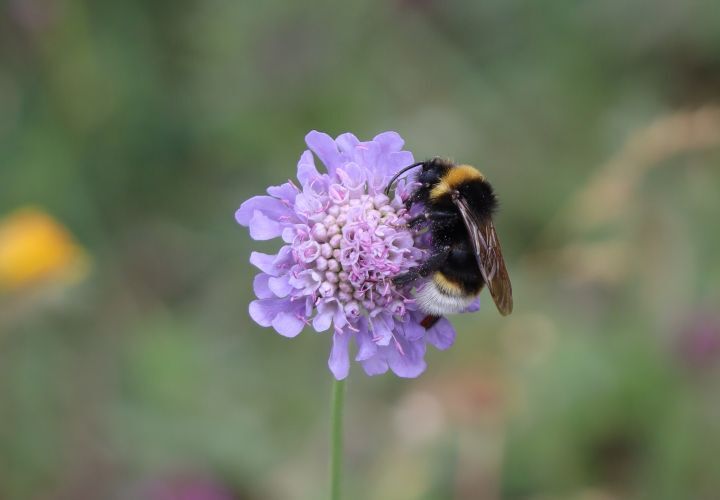
Protecting wild bees in Europe
Calcareous grasslands are wildflower-rich ecosystems that develop on shallow, alkaline, nutrient-poor soils over chalk or limestone bedrock. They are rare and important habitats for wild bees and other pollinators – yet how well they can support these valuable communities depends on how they are managed. An international research team has shown that long-term abandonment or intensive management threatens the diversity of wild bees.
more…
Smart use of trees and crops brings best yield
Cultivating crops – such as wheat, barley and rye – alongside rows of trees is a system of agroforestry that is known as “alley-cropping”. It serves many functions: in addition to enhancing ecosystems and biodiversity, it can also counteract the negative effects of growing crops in treeless open land. Benefits include improved soil quality and reduced wind erosion, but nearby trees can create competition for resources. It's not easy to weigh up the benefits of alley-cropping so researchers investigated to find what works.
more…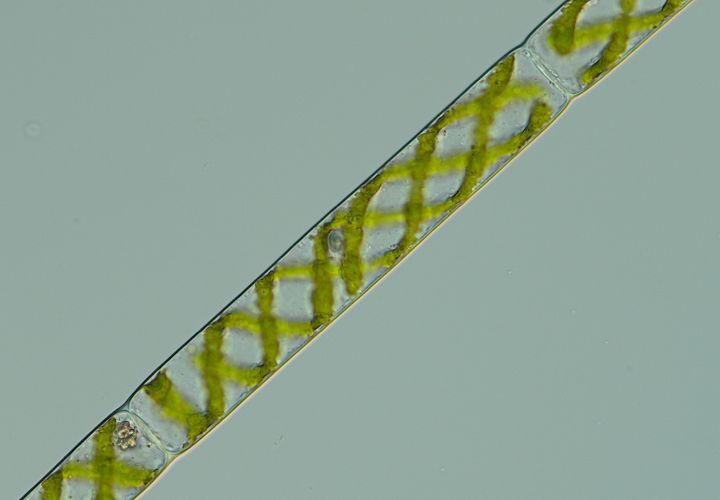
Deep evolutionary history of land plants’ closest algal relatives
What did the algae that gave rise to the first land plants look like? Researchers investigated the closest living algal relatives of land plants: Zygnematophyceae. Despite their relatively simple appearance, they are particularly important for understanding plant evolution due to their close relationship with land plants. Researchers analysed a dataset covering more than 100 species and 2,000 genes to shed light on the evolution of multicellularity.
more…


Events
Lade Veranstaltungen…


